
How the Story of Nadav and Avihu Reveals a Deeper Path through the 49 Days of Inner Refinement
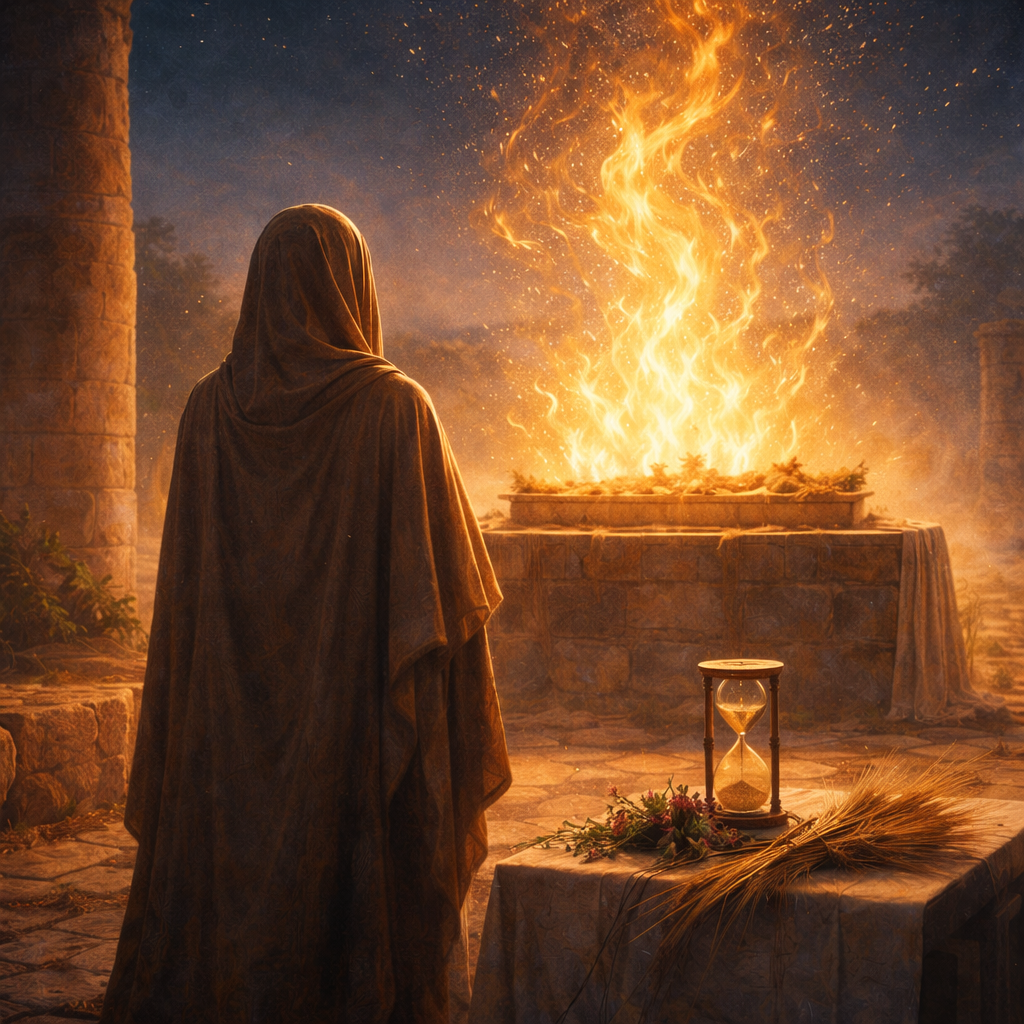
Although Parashat Shemini has just passed, one of its central questions continues to unfold during the Omer: how do we receive spiritual intensity without being overcome by it?
The Fire That Consumes
In Parashat Shemini, the Torah presents one of its most unsettling spiritual moments. Aaron’s sons, Nadav and Avihu, step forward with what the Torah calls esh zarah—a “strange fire”—and are immediately consumed by the divine flame (Leviticus 10:1–2).
Commentators over many generations have debated the nature of their mistake. Were they intoxicated? Acting independently? Overstepping the boundaries of ritual discipline?
Yet beneath these explanations lies a deeper question—one that feels especially alive during the weeks of the Omer:
What does it mean to draw close to the Sacred in a way that transforms us, rather than consumes us?
The Kiss of Death — and Its Danger
A striking interpretation from the Or HaḤayim, a revered 18th-century Moroccan Kabbalist, reframes this episode entirely.
Rather than seeing Nadav and Avihu as simply punished, he suggests that they experienced what rabbinic tradition calls the “kiss of death”—a moment in which the soul cleaves so deeply to God that it does not return to the body (Or HaḤayim on Leviticus 16:1).
This is how tradition sometimes describes the passing of great tzadikim [righteous people], whose souls are gently drawn back into their Source.
But here lies the crucial distinction.
For a tzadik, this moment comes at the time of natural death, when a person is ready. Nadav and Avihu, by contrast, rushed toward it. They entered the sanctuary overcome with spiritual intensity so great that it dissolved the boundary that sustains embodied life.
Their failure, in this reading, is not a lack of devotion.
It is a lack of integration.
It is not the fire that is the problem.
It is the capacity of the vessel that receives it.
Two Fires: Illuminating and Devouring
Earlier in the same parshah, another fire appears. A divine flame descends and consumes the offerings on the altar, and the people respond with awe and joy.
Two fires emerge in Shemini:
- one that sanctifies
- one that consumes
The difference is not the intensity of the fire, nor the sincerity of the longing that reaches toward it.
The difference is whether there is a vessel capable of holding the encounter.
The Omer: Building the Vessel
This distinction becomes especially meaningful in the days following the first night of Passover, as we begin counting the Omer.
What started as an agricultural journey—from barley harvest to wheat harvest—was reimagined by the mystics as a path of inner refinement.
These forty-nine days unfold through seven qualities:
ḥesed, gevurah, tiferet, netzaḥ, hod, yesod, and shekhinah.
In my own work, I approach them as:
- lovingkindness
- boundaries
- harmony
- action
- yielding
- connection
- receiving
Each day is not simply counted—it is cultivated.
Where Nadav and Avihu represent an unintegrated surge of spiritual intensity, the Omer offers a different model:
a slow, deliberate preparation of the self to receive.

When the Vessel Is Not Yet Ready
Mystics often describe spiritual growth not as acquiring something new, but as becoming capable of receiving what is already present.
This is a subtle art requiring patience, integrity, openness, and grace.
There are moments when:
- inspiration comes too quickly and slips away
- longing pulls us beyond our capacity
- insight arises but cannot yet be lived
This is what an unprepared vessel feels like.
The Work of Integration
The work of the Omer unfolds in the ordinary moments of life:
- how we speak
- how we respond
- how we carry responsibility
- how we remain present when intensity increases
Over time, the vessel grows stronger.
The same fire that once overwhelmed begins to illuminate.
Spirituality Requires Return
The Or HaḤayim describes Nadav and Avihu as overcome by a love so powerful it eclipsed even their instinct for survival.
There is something profoundly beautiful in this, but also profoundly dangerous.
Spirituality asks for transcendence, but it also asks for return.
We are called to remain:
- in the body
- in relationship
- in responsibility
Becoming a Vessel for Revelation
On the fiftieth day, the festival of Shavuot arrives, recalling revelation at Sinai.
We are not the same as we were at the beginning of the count.
This is not because we have reached perfection—
but because we have participated in the process of refinement.
Revelation, in this light, is not imposed from above.
It takes root within a vessel we have prepared.
The Fire That Gives Life
The Omer becomes a daily practice:
one quality, one interaction, one moment at a time.
The goal is not to flee the fire.
Nor to be consumed by it.
The goal is to receive it—
and let it illuminate, warm, and give life.
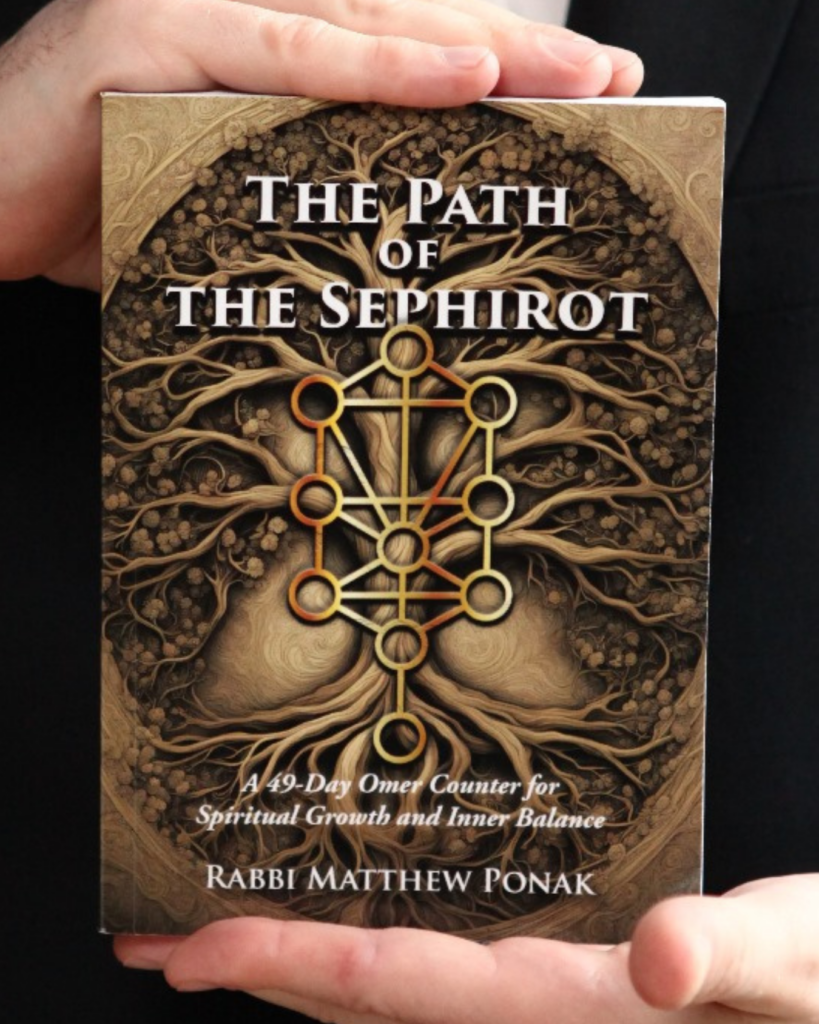
If this teaching resonates with you, I explore this path more deeply in my book The Path of the Sephirot, where each day of the Omer unfolds as a lived process of refinement and integration.
You can learn more or access the book here: https://matthewponak.com/the-path-of-the-sephirot/